

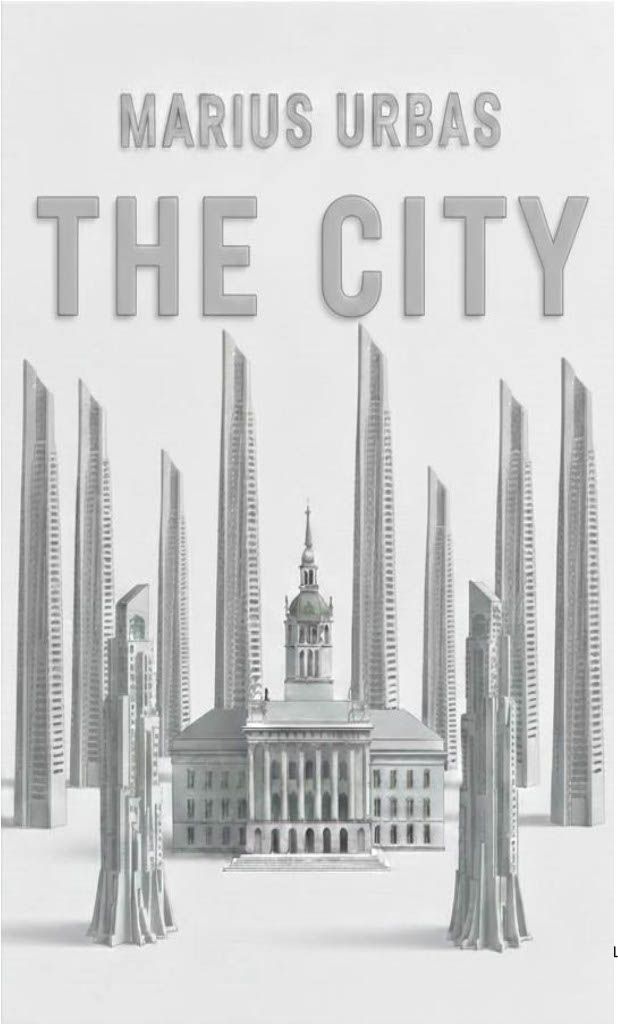
The City
Marius Urbas
Biography
I began to write because my desire to express my thoughts was stronger than my lack of experience as a writer. I wanted to analyze relationships between people and the individual’s connection to their environment. I had a lot to learn. I completed courses on creative writing and on screenwriting. I read everything available on the craft of writing. I forged connections with professional writers. Finally, I earned a certificate in Creative Writing from Vilnius University and began working with a writing mentor and editor.
I am reaching out with the goal of publishing my book and challenging myself to produce a book that is important to readers. There is an adage: “It’s better to try something and fail at it than to have regrets later in old age.”
Title:
The City
Word Count:
56000
Genre:
Fantasy: Urban
Query Letter:
At 56,000 words, this social dystopian novel is written in a mosaic narrative structure. The novel is set in 2525, and opens with a meeting of the Planetary Council. The twelve members of the Council analyze an archeological find—stories written in 2025 for future generations that narrate the life of these “uncivilized” ancestors.
Eleven brief histories about love, death, nutrition, and personal boundaries become the subject of the Council’s investigation. The Council members are convinced that the less they have in common with the past, the more potential there is for a perfect future society. The aim of this novel is to encourage the reader to reflect on the meaning of humanity, individuality, community, and respect for others in their own lives.
This topic is relevant for those who are striving to create an ideal life and are searching for the meaning of existence; those who strive to become a better version of themselves. The contemporary person is constantly being pushed to be more productive, effective, and to perform social algorithms.
Through the prism of the fantasy genre, The City raises questions on how much an individual is prepared to sacrifice in the name of efficiency for society.
Synopsis:
The City takes a philosophical look at the essence of what it means to be human and how the understanding of humanity has shifted and changed over five hundred years.
The novel is narrated through the lens of a meeting of the Planetary Council in the year 2525. The basis for the meeting is the discussion of eleven stories left behind from the 21st century, from our ancestors as a letter to future generations. The Council members evaluate everyday life of the past (love, death, nutrition, ambitions) and make proposals to change the social order of the future so that it becomes as different as possible from the types of lives led by “savages of the 21st century.”
About the setting and the main character
The City of the Future consists of MultiBuildings where tens of thousands of residents lived together in harmony. Each individual performs a specific function for the good of society. The historic city center, referred to as The Old Town, with its massive Council Building, has been left unchanged over the centuries as a living example of the “ineffective past.”
The man hero of the novel is Number Twelve. He is the lowest ranking member of the Council. He is ambitious. He is always prepared to present his viewpoint and expects to climb the hierarchical career ladder. However, the Meeting does not go as he had expected. He witnesses the moral metamorphoses of other Council members. Potentially a whistle-blower, he must decide what is more important: his personal ambitions or the future of the inhabitants of the Planet.
Chapter Breakdown
The Council convenes to examine a series of “messages to future generations” found by archaeologists. These are eleven texts about the lives of people in the 21st century. Each story analyzes universal themes:
Personal boundaries and eating habits
Selfish love and sexual adventure
Pursuit of ones dreams while disregarding rules
The concept of death.
All twelve Council members are each assigned one Rule of Efficiency to work on. Each one reads out loud the story assigned to them and submits a proposal on how the society of the future could avoid replicating the “wild and undisciplined” behaviors of their ancestors.
If the rule, “Absolute Effectiveness” is not attained one hundred percent, they might seek assistance by referring to the notes left behind by the guru of efficiency: “How to attain one hundred percent efficiency” (however, her life ended with suicide).
If the City’s inhabitants still are not capable of living according to the rule, “Respect for All,” and the letter from the past about aggressive flower sellers reveals the root of this problem, perhaps would be prudent to cut all ties with humanity’s past?
Philosophical position
The novel does not provide any easy answers. The reader must draw their own conclusions:
Is it more important to serve society or to be an individual?
What is better: to study and build a professional life or to serve as a “functioning cog in a machine” or to seek your calling your entire lifetime?
My goal is for the reader to reflect on the significance of humanity, individuality, community, respect for others, and the time allotted to each of us on this planet. Or perhaps they will ponder the question: “If someone were to read the story of my life in five hundred years, would they consider me a strange savage or a person to be envied?”
Conclusion
At the end of the novel, a vote is held using the “Spheres of Fate.” Will the Council members decide to bring humanity closer to the ideal, or have they already glimpsed that ideal society they seek in the stories of the past? Although Number Twelve’s vote carries the least weight in the system—only one against seventy-seven—sometimes even a single vote can be decisive. This responsibility becomes a heavy moral burden for him. The reader is left at a fateful moment when Number Twelve rolls the ball into the Hole of Fate, hoping, but not knowing, whether it is still possible to change the system.
Pitch
We are often convinced that we are smarter than our ancestors. But what if, in five hundred years, our descendants look back on our lives with disgust?
The City is a dystopian novel in which two eras collide. Eleven intimate, dirty, but true stories from our everyday lives end up on the sterile table of the Council in the year 2525. Council member Number Twelve must decide what is more important: his personal ambitions to climb the hierarchical career ladder or a mysterious, imperfect, and fading connection to the past.
Target Audience:
The primary audience for The City includes adult and upper Young Adult (YA) readers of speculative and social fiction. It is written for thoughtful readers who appreciate atmospheric, intellectual prose and are drawn to stories exploring human nature, urban isolation, and the struggle for agency within rigid social systems. It will appeal to those who enjoy "literary-leaning" dystopias where philosophical depth is as important as the plot itself.
Comparable Books
We by Yevgeny Zamyatin: A foundational influence exploring the existential tension between individual identity and the rigid, mathematical control of a highly structured state.
The City of the Sun by Tommaso Campanella: A thematic counterpoint questioning if a "perfect world" is attainable or if utopia inherently conflicts with human reality.
Time Shelter by Georgi Gospodinov: A parallel in its use of temporal layers and the contrast between eras to examine how the past defines our present.
First Pages
2525
Just like every other morning, Number Twelve carefully tiptoed into his wife’s bedroom. He set down her cup of coffee on the night table. Then he waited for the caffeine molecules to wake her. It was an old habit, left over from when they first began their lives together.
After a few minutes, his wife turned, opened her eyes, and looked towards Number Twelve. There had been a time when this morning ritual flooded them both with pleasant emotions, now it was just a worn out habit.
“I wanted to sleep some more. You’re shortening my life,” she said.
Shortening my life. That was a nice turn of phrase. But like all old-fashioned expressions—it was illogical. All humans on the planet lived exactly as long as the time span allotted to them—
one hundred solar cycles. One hundred rotations of the sun around the earth. And no one could change that.
Number Twelve retreated to the kitchen and pushed a button on the PowerFood. In the background, the ImagineScreen played a Spanish dance for classical orchestra.
“Shortening my life? One more anachronism,” he mumbled to himself.
The PowerFood hummed to life and produced the usual meal. Coffee and juice. Bacon and eggs. A standard simple meal. He knew it was banal, but he liked it that way. Every morning these scents reminded him of his childhood, his parents, his first home. After he finished his breakfast, he programmed the PowerFood to produce the same meal for his wife the moment the sensors picked up her movement in the kitchen. He carefully went out the door.
Number Twelve was living out his allotted time. He had a carefully constructed family, and his body and mind were designed precisely to best serve the functions needed by society. Had he lived in those times when people believed in charms and magic, when people’s knowledge of physics, chemistry, biology, and other sciences was primitive, he could have said that he was lucky. Now everyone knew that the same luck applied to everyone. Almost everyone. Approximately nine out of ten of the planet’s inhabitants had a perfectly suited partner and a function in society that matched their genetic predisposition.
He had a tough day ahead of him. It was a day that could significantly raise the meaning of his existence. He had to prepare appropriately, and carefully. During the SevenDays leading up to the Meeting, he woke earlier than usual. The workout machine hummed with intensity, whistling and hissing, massaging his every muscle, searching for tendons that had lost their elasticity, forcing blood to gush through his veins and arteries.
Every morning all the regulating components were carried throughout his body and absorbed by muscle fibers and gray cells. His muscles were functioning. They would carry him to the Council building. His brain had been fed and capable of fulfilling its duties accordingly.
This time, a new model from the neighboring lot awaited him. The southern MultiBuilding was the first to install anti-gravity engines. These were much quieter and flew along on pillows of air. There was no roar of air currents or the scraping of the body against the natural grass cover. Nothing interrupted the general sense of relaxation. Only his fingers tapped away the Bolero melody he’d listened to in the morning. Number Twelve had noticed the dance playing on the ImagineScreen through his periphery vision. He was amazed, as though they were not a part of his body: “After all, there is some sort of emotion here.”
Through the window, he watched the cityscape slide past.
In the distance, the pale gray MultiBuildings climbed into the sky. On one side of the street, long rows of FitchTrees grew almost as tall as the buildings. On the other side, engineered to withstand the local climate, were rows of BananaTrees that bore fruit a few times a year. Ideal raw materials for manufacturing FoodSubstance.
“Perhaps it’s a good thing,” he said to himself out loud, continuing the thought that he had first started earlier, “that they did away with TeleTransport. It’s quite nice to see all this beauty with your own eyes and not through the ImagineScreen. I must make a note to change my schedule to include time for visiting nature.”
One of Number Twelve’s worst childhood memories was his father’s stories about friends who disappeared during TeleTransport. Even more horrible were the stories of those who were wounded or cut up into pieces. “Perhaps one day this technology will be safer, but I still won’t have any part of such nonsense. Let the young people squeeze themselves into closets and put bowls with sensors on their heads! These days, such people are irresponsible and crazy!” he could hear his father’s words still.
In his father’s day, the social experiment of making TeleTransport the main mode of mobility ended up such a horrible fiasco, that people transferred from their old homes into the MultiBuildings much sooner than expected. The need to be in a safe building was very strong. People only went out for essential reasons. Number Twelve’s responsibility was one of them.
His eyes caught sight of a wild creature. Something resembling a fox ran across the road and hid in the shadow of a hill. These hills were like the remains of a burst bubble – each of them, under a thin layer of earth, concealed the ruins of an ancient building. Those buildings were uneconomical, inconvenient, and harmful to the human body and soul. They let in too little sunlight and didn’t provide enough physical space. They were built with outdated building materials and maintenance technologies.
A few hundred solar cycles back, there was a swift growth in the human population. After that the birth bubble burst and the planet’s numbers tragically decreased. The old buildings were torn down when the population of the city became six times smaller. In the historic Old Town of his city ten MultiBuildings were constructed. They were gorgeous, and they satisfied all the needs of Homo Sapiens Novus. Ten thousand residents could fit inside one MultiBuilding. A hundred thousand could fit in one city. That was the optimum number. It had been calculated, proven, and backed up by practice.
His transport stopped in front of an old building that had seen nearly a thousand solar cycles. The building itself was neither impressive nor massive, but Number Twelve still felt intimidated by it. Six massive columns supported an imposing portico. The nine steps he had to climb tested the physical strength of every Council Member. After the rules were changed and a limit of exactly one hundred solar cycles for a single lifetime was introduced, the stairs were accorded an additional safety role. If any Member was unable to climb them, a new Member would be elected to replace them.
Number Twelve, being the youngest of them all, could afford to wait until one fine day the height of the stairs made it impossible for one of the higher numbers to climb them. There was an adage from former days—to trip someone up. That would work here. His desire to become Number Eleven, Ten, or even Five, was great. On the other hand, the stairs frightened him. That was why two times a day he lay down on the training table and gave himself up to a work over that was not always pleasant.
This building, that had seen so many solar cycles, stood in the very center of the Historical Memory zone. Like the taste of an egg with bacon or the family ideal, the building was protected from any changes. All of its details, even the massive, human-powered doors, remained in place. “Here goes,” he muttered as he pushed the weight of his shoulder into the door, opening it just enough to slide inside. He entered the hall filled with historic portraits hanging on the white walls.
Based on the principle of psychological contrast, the portraits were positioned so that the Madonna faced hordes of peasants who founded an ancient collective farm, while members of an um-pa-pa band faced Heroes of the New Age, and the Earthly Epic Pentalogy faced the new Ro Perfection do Decalogue. At the end of the grand entrance hall, on the right side, was a narrow staircase that led down into the cellar. Its walls closed in on each other, and the semi-circular vaulted ceiling almost touched your head as you descended. Such a claustrophobic environment could cause panic attacks; therefore, forest holograms and nature sounds were provided for sensitive visitors. He descended and entered the Meeting Room, where he was met with the traditional dim lighting.
“Number Twelve!” Number Six called out with cheerful reserve. He waved. Number Six was an old friend from university. Such familiarity was allowed under the circumstances.
Everyone else around the table followed protocol. They bowed their heads the slightest from afar and remained seated on their chairs with their arms—from their elbows to their fingertips—placed on the table’s surface.
Number Twelve answered with a broad smile but did not emit a sound. One more horror pounded away at him inside his skull. The wooden chair, which he would now be required to sit on for an hour, or maybe even an hour and a half, was terribly old and uncomfortable. He could only hope that this meeting would not last longer than usual. The chairs were covered with a thin layer of natural fabric, but it did little to help—you would never find such a hard surface in a modern household. On the other hand, he knew that he had to make sacrifices for his career (it seems that in ancient times this word meant both professional development and growth in personal significance in society?). He had accomplished his task perfectly and he was certainly worthy of switching places with Number Eleven, or even Number Ten. The Council’s rules of procedure clearly described the rotation system, and he had approved of them.
Number Twelve sat down in the last chair available and closed the Council circle.
“So, if we are all here now, we may begin, colleagues,” Number One, who was seated to his left, began.
♦
“Knowing that you all conscientiously fulfill your assigned duties, and therefore assuming that you are prepared for today’s work, I would like to express my delight at the promising results of this meeting,” Number One began the meeting with the usual formula. He cleared his throat and stretched. His wrinkled forehead and aquiline nose were visible in the dim light. He ran his hands through his hair, as if to check that the gray streak tied at the top of his head fell neatly onto the back of his head. It was a distasteful gesture, but forgivable for a man of his age and status.
“Three days ago, you all received different information with my request to familiarize yourselves with it and to prepare your suggestions. I’d like to give a short introduction and explain the key points, which are essential, no, necessary, to come to a decision.”
He spread open his palms and lifted them upwards, engaging the ImagineScreen. A beam of light descended from the ceiling down to the table, forming a hologram of a gently undulating curtain. Projected onto it was a building from the Old Town.
“The Memory Council has informed us that while enacting the Historical Renewal program a strange artefact was unearthed. As you all know, in the past this place was called The Old Town. We are less than a kilometer distant from that location adjacent to the Medieval City Wall. That section had been renewed in the twenty-second solar cycle,” Number One concluded by disdainfully flicking his right hand in front of his face and carelessly turning his head as though to indicate direction.
They couldn’t see anything through the thick walls of the building. Number Twelve remembered that Number One’s lack of concreteness had always annoyed him. Many years ago, Number One had stood in as his lecturer at the University. He taught an Art Appreciation course. At that time, he was still able to address him by his name and surname. Even then, Number Twelve wondered how someone who was so vague could teach. It was a good thing that now the emotion of extreme annoyance was blocked in him.
“The post-Soviet barbaric-style residential building on Theater Street was to be replaced by a four-story apartment building from the 19th century, and along with it, a two-story merchant’s private house with storage rooms from the 16th century. That’s a very interesting detail, colleagues! A brick fence post has survived to this day. On it is a palm-sized plaque with the name of the house—Villa Maria. Historical sources show that the wealthy merchant who built the house named it in honor of his wife Maria. Here you can see the plaque!” Number One regained the posture of a history enthusiast. A small old brick wall with a weathered metal plate rose up before the Council Member’s eyes. The old lettering was difficult to make out, but impressive.
“This is the essential point. This is why I’ve called this meeting. While completing their deconstruction work, members of the Memory Council took down a historically insignificant building and in the empty space created by the removal of the building, at approximately three meters depth, they found a box constructed of thin metal.”
A new projection appeared. A dark green cylinder, covered with rust-colored marks, slowly rotated above the table. All twelve could clearly see the ancient pictures and letters that covered the surface of the box. It was many solar cycles old. All gathered had enough education to immediately discern that they were being shown an ancient cookie tin that opened when the lid was removed.
“Cookies,” Number One said, confirming what each of them was thinking. “That was an especially non-economical single use container.”
“For our purposes, it was used twice,” Number Two said and smiled.
“Yes, I see that you have done your research and have familiarized yourself with the information I sent you,” Number One said, complimenting him. Then he continued, “The materials that you have all received were stored inside. They were sheets of paper, which were common in the twentieth and twenty-first solar cycles. After a deeper analysis was made, it was established that the papers were deposited into the cookie tin at the beginning of the year 2025. These writings are exactly five hundred solar cycles old!”
To illustrate Number One’s words, the ImagineScreen changed the image of the cookie tin that was hanging in the air before their eyes. The lid came off, releasing a pile of curled pages that were yellowed, some brown, some with mold spots. The cookie tin flew off towards the ceiling and disappeared. The papers slowly separated one from the other and began to rotate in, moving closer towards the Members’ eyes.
Number Twelve’s pupil’s dilated with surprise. A few days ago, he had received a fraction of the cookie tin’s contents. They had been converted into the current format and no longer contained their “ancient charm.” That was how he referred to all the old materials in the archives, to everything he had managed to see with his own eyes or to touch with his own hands. This opportunity was only afforded to him through his studies of City History.
His interest in relics from various time periods began in childhood. Reading the texts he received, he recalled one of the most important moments of his life. When he graduated from secondary school, his parents gave him a metal detector as a gift. At the time, it was a huge innovation—a new technology that allowed you to see through natural soil or man-made materials. A huge wave of enthusiasm in archaeological research arose within him. He felt immense gratitude to his parents, who, seeing his obsession with ancient history, spent a considerable amount of Planet Money to give him such a gift.
For several SevenDay cycles, he slept only five hours a night. All the rest of his time was spent running around the streets of the Old Town, which he had walked hundreds of times before. He saw everything with different eyes. Whereas before he had to imagine the people who had lived here hundreds of solar cycles ago, now he could see the relics lying underground. Unexcavated artifacts. Strange and incomprehensible objects, or parts of them. Tools, animal bones, coins. He felt like a preschool boy who had stumbled into a Prehistoric Animal Park—there was so much to see, and he wanted to pick everything up and touch it! But he couldn’t reach his finds. Only specialists are allowed to disturb historical layers. That’s when he decided to become an archaeologist—such strong enthusiasm would convince anyone that he is worthy of these studies.
He felt envious of the Memory Council members who had discovered this treasure! It was not energy, nor gold, nor diamonds. It was much more—the opportunity to be the first to touch a relic that was touched for the last time by human hands five hundred solar cycles ago.
“The Memory Council conducted a test. They confirmed what we specialists gathered here today can clearly see for ourselves. This find are sheets of papers marked with writing. The writing was created by a printing apparatus that was popular at that time called a laser printer. It was a common means of conveying information. The text is written in the local dialect, which is quite different from today’s spoken language. Roughly a third of the words are no longer in common usage. The grammatical forms are no longer comprehensible to us. And the diacritical marks used here have changed. For this reason, before releasing this artefact for your analysis, all the text had to be converted into contemporary language.”
Number One pressed his left hand to the tabletop. A large hole opened and a small dish containing water capsules emerged. Number One tossed one of the capsules into his mouth and waited until its outer layer dissolved, then, enjoying the taste, he swallowed it.
“Colleagues, about the texts. These stories are unrelated to each other. The only logical connection is that they reveal information about the inhabitants of the City, their troubles, and their lives. The Memory Council conducted intensive research and found only one piece of information in the Planet Information Storage Repositories that is likely to be related to this discovery. On the first day of the 2025 solar cycle, a request was sent out to the City’s residents to submit their stories about life in the city. It said that these stories would be passed on to the distant future. It is very likely that what we see here is a part of those stories. There are only ten of these stories, even though six times more people lived in the city at that time than now. It can be assumed that this is not the only such shipment from the past. Probably, an enthusiastic city resident organized the writing of letters for future generations. They were hidden in various places around the city in the hope that after many solar cycles, the letters would be found and read with great interest by future residents. I hope our city would find as many of these packages from the future as possible. Or maybe even all of them!”
“That’s quite a request… If every time they find a tin of stories we are called to a meeting, we won’t have any peace,” Number Twelve thought to himself.
“It’s apparent that they have achieved their goal,” Number Four said, “but are we going to spend our time analyzing literary works that were not written by professionals?”
Number Twelve raised his eyebrows at such a tactless statement. “It’s not polite to interrupt, and especially to interrupt Number One,” he said.
Number One slowly turned towards Number Four, and with a wave of his hands, sent the images of the sheets of paper upwards to the same place the tin had gone. The ImagineScreen dimmed, and those sitting around the table could see each other clearly again.
“Yes, Number Four, you are right. This find is not significant enough for us to spend three days analyzing such a wide range of writing, and then to call a meeting again. Especially in this place, where no one can hear us. I’ve asked Number Eleven to prepare the information and to present us all with a question that we can answer. If you please?”
Number Twelve winced. “I’ve been overlooked again. Again, it’s Number Eleven. Usually this is a job for Number Twelve. If this goes on, I won’t advance in my position for another five solar cycles, if not ten.”
“In this situation, we must approach the performance of our duties with the utmost rigor and responsibility,” Number Eleven said.
The significance of what Number Eleven had said finally penetrated his brain.
Everyone around the table nodded in agreement. He had no choice but to agree with the unspoken thought. After all, she couldn’t say anything new—this was the third meeting in a row devoted to the Rules of Efficiency. Number Twelve suspected that Number One’s purpose in life was to turn the Planet into a precisely and flawlessly functioning mechanism. He had devised these rules and created a system to monitor their implementation.
Number Eleven, seeing that everyone was in agreement, continued: “After a brief overview of the implementation of the Rules of Efficiency, I would like to explain how this situation, or more precisely, the attempt to improve it, is related to Number One...” Number Eleven paused to take a closer look at Number One. “The Memory Council translated the stories they found. It also analyzed the lifestyle, habits, rules, and other characteristics of the people of that period. According to experts, this information may be useful in our times. By analyzing the society that existed five hundred years ago, we can adjust some of the rules that currently exist. After all, none of them have been implemented one hundred percent. This way, we will correct the shortcomings I mentioned at the beginning of my presentation. It is a wonderful coincidence that there are ten Rules of Efficiency and ten stories were found. Therefore, Number One assigned one story to each of the people gathered here according to their area of expertise. You were asked to analyze the text and consider how the rules should be changed to achieve Universal Efficiency in organizing life on the Planet.”
Number Twelve shuddered. Everything was correct—there were ten rules and ten Members responsible for their survival. Number One organizes that Council work. Number Twelve was learning to become a true member of the group. He was “gaining experience and waiting until he could replace a Council Member who was leaving.” That was how it was formulated in his file.
However, this time he received a story together with his task. Was it a misunderstanding? A mistake? Or perhaps he would finally replace a member of the Council.
Number Twelve felt a small rush of adrenaline and slightly larger dose of dopamine.
“Number Eleven is fulfilling my function. Does that mean that I will now become Number Eleven?”
♦
